Rwanda Builds New Cities To Stop Kigali Population Explosion
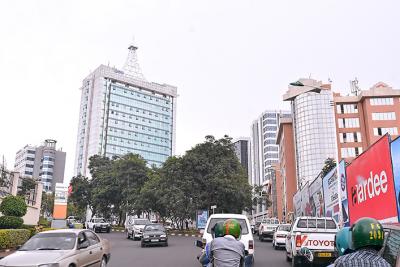
Jean Bosco Hakizimana, 40, left his village of Musange in Nyamagabe district, Southern Rwanda in 2008 to earn a living in capital Kigali.
The father of three was employed as a technician at Utexrwa, a textile company. He never returned home, but for rare family events.
“Life is in Kigali, period,” he says. But Hakizimana might soon think twice, if everything works as planned.
The government is implementing a master plan to establish six strategic secondary cities: Muhanga and Huye in South, Rubavu and Rusizi in West, Nyagatare and Musanze from Eastern and Northern Province.
These cities will redirect employment to rural areas and avoid growing rural-urban migration. There are heavy investments in infrastructure going on, such as electricity, roads, hospitals, schools and taxi-parks. Businesses are also expanding to further towns, suppressing pressure that has increasingly been chocking Kigali.
In Muhanga town, 50km from Kigali, Sonarwa, the country’s largest insurer, is raising a-4story building. Bank of Kigali (BK), the largest local bank, has inaugurated a-4story building too.
With medium businesses mushrooming, financial institutions are following the winds. Manufacturers and importers are opening branches in these cities too.
Burundian traders in the souther province, and Congolese traders in the north, major importers of Rwandan goods, don’t travel to Kigali anymore to access the goods or services.
In the district of Huye, for example, a predomintaly coffee growing area, has announced that its annual revenues will double upto Rwf2 billion ($2.8 million) from taxes after the newly constructed ($6.5 million) modern bus terminal.
“Our revenues from taxes will increase from Rwf1 billion to Rwf2 billion ($2.8M) every year,” Huye mayor, Kayiranga Muzuka Eugene told KTPress.
The father of three was employed as a technician at Utexrwa, a textile company. He never returned home, but for rare family events.
“Life is in Kigali, period,” he says. But Hakizimana might soon think twice, if everything works as planned.
The government is implementing a master plan to establish six strategic secondary cities: Muhanga and Huye in South, Rubavu and Rusizi in West, Nyagatare and Musanze from Eastern and Northern Province.
These cities will redirect employment to rural areas and avoid growing rural-urban migration. There are heavy investments in infrastructure going on, such as electricity, roads, hospitals, schools and taxi-parks. Businesses are also expanding to further towns, suppressing pressure that has increasingly been chocking Kigali.
In Muhanga town, 50km from Kigali, Sonarwa, the country’s largest insurer, is raising a-4story building. Bank of Kigali (BK), the largest local bank, has inaugurated a-4story building too.
With medium businesses mushrooming, financial institutions are following the winds. Manufacturers and importers are opening branches in these cities too.
Burundian traders in the souther province, and Congolese traders in the north, major importers of Rwandan goods, don’t travel to Kigali anymore to access the goods or services.
In the district of Huye, for example, a predomintaly coffee growing area, has announced that its annual revenues will double upto Rwf2 billion ($2.8 million) from taxes after the newly constructed ($6.5 million) modern bus terminal.
“Our revenues from taxes will increase from Rwf1 billion to Rwf2 billion ($2.8M) every year,” Huye mayor, Kayiranga Muzuka Eugene told KTPress.