In push to modernize, Rwandan capital struggles to house its population
KIGALI, Rwanda — At the edge of the Rwandan capital, on a hillside formerly packed with small houses made of compressed earth, Wang Zenkhun pours over a map of what will soon be the East African country’s largest residential development.
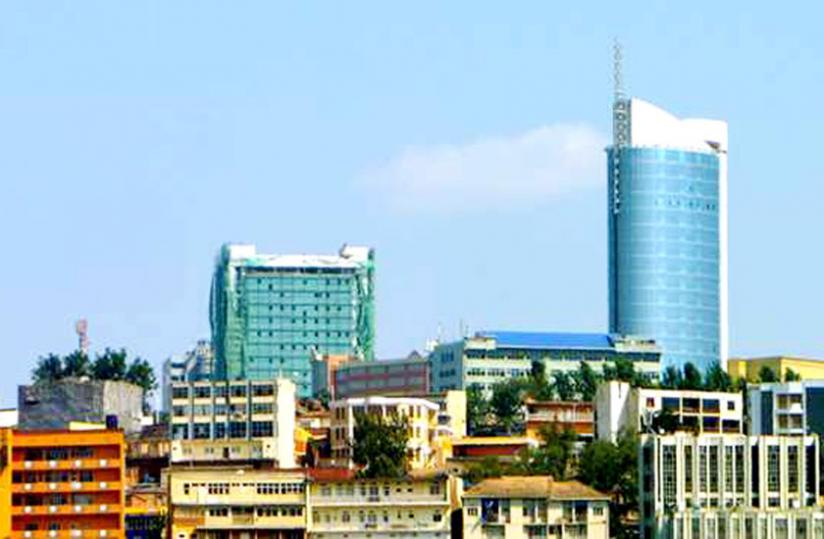
Wang, an employee of the state-owned China Civil Engineering Construction Corporation, serves as site manager for the project. He oversees approximately 100 Chinese and 2,500 Rwandan workers, who toil in the sun on the 80-acre site outside his office. Known as Vision City and financed by the Rwanda Social Security Board, or RSSB, the country’s pension body, the project will begin with an initial phase of 504 units, due to be completed next year. It will eventually scale up to 4,500 homes. In line with Kigali’s ambitious master plan, which seeks to transform the city of 1.3 million into a “center of urban excellence,” the site’s developers promise a community “tempered with a tinge of elegance and subtle nobility” that will be a “reference point for contemporary Rwandan living.” In addition to the houses, there will be restaurants, hotels, offices, schools, a sports complex and a Wi-Fi-connected town center. It’s all part of a citywide mixed-use strategy meant to decentralize key business and recreational activities and minimize road congestion.
Wang, an employee of the state-owned China Civil Engineering Construction Corporation, serves as site manager for the project. He oversees approximately 100 Chinese and 2,500 Rwandan workers, who toil in the sun on the 80-acre site outside his office. Known as Vision City and financed by the Rwanda Social Security Board, or RSSB, the country’s pension body, the project will begin with an initial phase of 504 units, due to be completed next year. It will eventually scale up to 4,500 homes. In line with Kigali’s ambitious master plan, which seeks to transform the city of 1.3 million into a “center of urban excellence,” the site’s developers promise a community “tempered with a tinge of elegance and subtle nobility” that will be a “reference point for contemporary Rwandan living.” In addition to the houses, there will be restaurants, hotels, offices, schools, a sports complex and a Wi-Fi-connected town center. It’s all part of a citywide mixed-use strategy meant to decentralize key business and recreational activities and minimize road congestion.